





.
We spend so much of our lives trying to hide the places where we have been broken. When we fall apart, our first instinct is to glue the pieces back together in the dark, hoping the world will only see our perfect, untouched surfaces. But there is a centuries old Japanese art called Kintsugi that teaches us a much kinder way to look at our wounds.
In Kintsugi, when a beautiful ceramic bowl falls and shatters, the master does not throw it away. Instead, they carefully mend the broken pieces back together using a resin mixed with pure gold. They do not try to hide the damage. They illuminate it. The philosophy is simple but profound: the break is not something to be ashamed of. It is a vital part of the object's history, and the golden repair makes it more beautiful and valuable than it ever was before it fell.
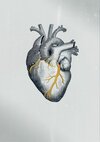
We heal in the exact same way. A scar, whether it rests visibly on your skin or is tucked quietly away inside your heart, is never a sign of weakness. It is your own personal Kintsugi. It is simply survival, beautifully written in gold across your flesh. The pain you endured didn't just fade into nothing; it transformed. The places where you were shattered and painstakingly put yourself back together are now the strongest, most resilient parts of who you are.
So, stop apologizing for the heavy lines in your story. Stop looking at your wounds as flaws that need to be hidden from the light. You are not a broken thing losing its worth. Wear your healing as your heaviest armor, and let your golden scars be the quiet, beautiful proof that you did not just survive the breaking. you mastered the art of putting yourself back together.
.
We spend so much of our lives trying to hide the places where we have been broken. When we fall apart, our first instinct is to glue the pieces back together in the dark, hoping the world will only see our perfect, untouched surfaces. But there is a centuries old Japanese art called Kintsugi that teaches us a much kinder way to look at our wounds.
In Kintsugi, when a beautiful ceramic bowl falls and shatters, the master does not throw it away. Instead, they carefully mend the broken pieces back together using a resin mixed with pure gold. They do not try to hide the damage. They illuminate it. The philosophy is simple but profound: the break is not something to be ashamed of. It is a vital part of the object's history, and the golden repair makes it more beautiful and valuable than it ever was before it fell.
We heal in the exact same way. A scar, whether it rests visibly on your skin or is tucked quietly away inside your heart, is never a sign of weakness. It is your own personal Kintsugi. It is simply survival, beautifully written in gold across your flesh. The pain you endured didn't just fade into nothing; it transformed. The places where you were shattered and painstakingly put yourself back together are now the strongest, most resilient parts of who you are.
So, stop apologizing for the heavy lines in your story. Stop looking at your wounds as flaws that need to be hidden from the light. You are not a broken thing losing its worth. Wear your healing as your heaviest armor, and let your golden scars be the quiet, beautiful proof that you did not just survive the breaking. you mastered the art of putting yourself back together.
.