
I want to read these books someday. Some are suggested by others, and some are books I came across and liked. I’m making a list here so I can save them for future reference. Hopefully, I will slowly buy them, add them to my bookshelf and read them one by one. 
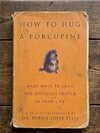
1. How to hug a porcupine. -- Dr Debbie Toffie Ellis
Some people are not difficult because they hate you. They are difficult because life has taught them to defend themselves, sometimes even against people who genuinely love them. And if you are not careful, you will spend your entire life fighting battles with people who are simply trying to protect wounds you know nothing about. What a painful reality! Think about that parent who turns every conversation into an argument, that spouse who becomes defensive over the smallest correction, that colleague who seems permanently offended, or that friend whose words can ruin your entire day. Now imagine discovering that beneath all those sharp edges is a human being who, like you, desperately wants to be understood, accepted, and loved. That is the powerful message behind How to Hug a Porcupine. Listening to Julie Briskman's narration, I found myself reflecting on how easily we label people toxic, problematic, or impossible without considering what might be happening beneath their behaviour. But this book also asks a rather uncomfortable question: What if, in somebody else's story, you are the porcupine? Omo! That question alone deserves serious reflection. The book offers 101 practical ways to navigate