

India doesn’t have just one saree culture.
It has a thousand ways of draping tradition, history, craftsmanship, identity and pride.
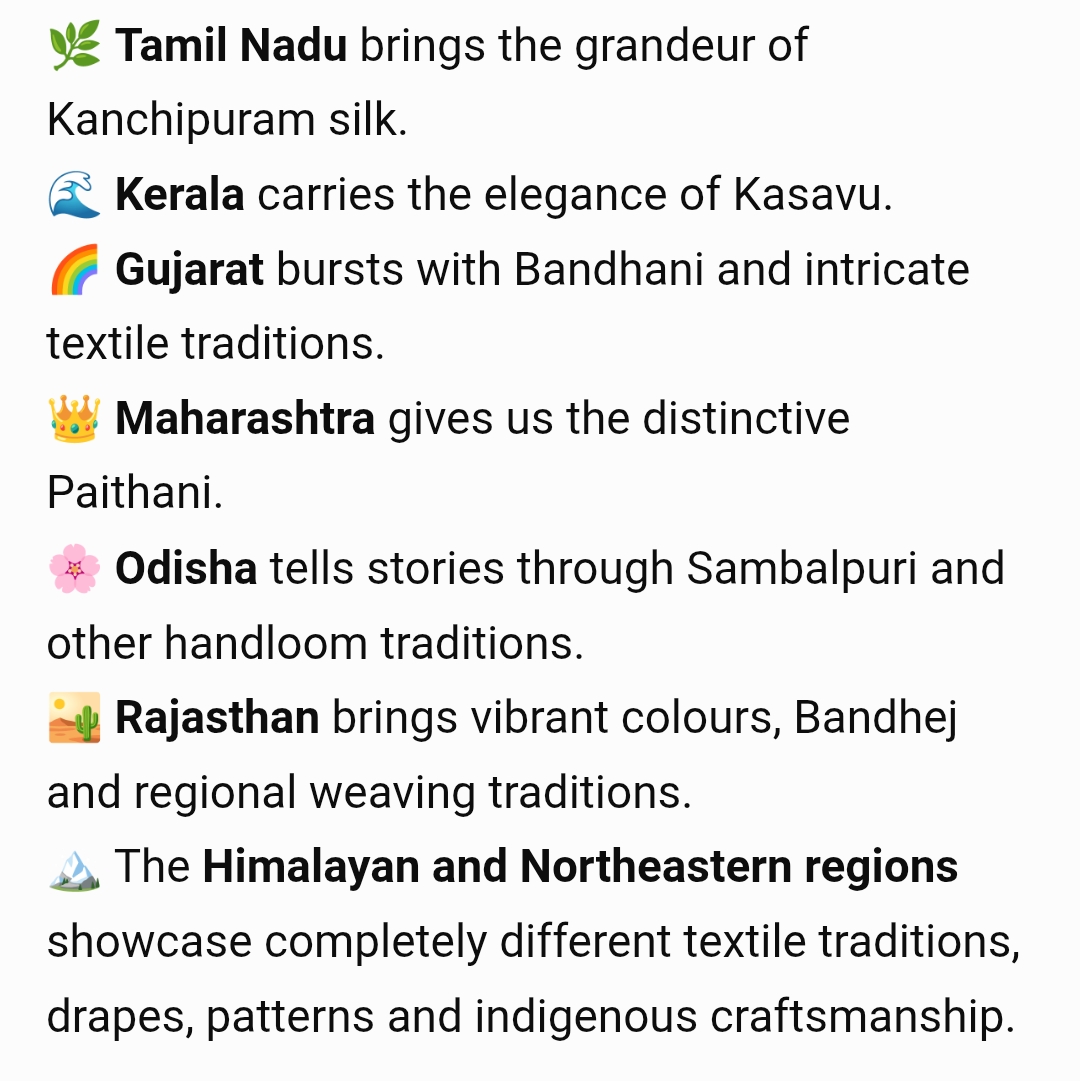
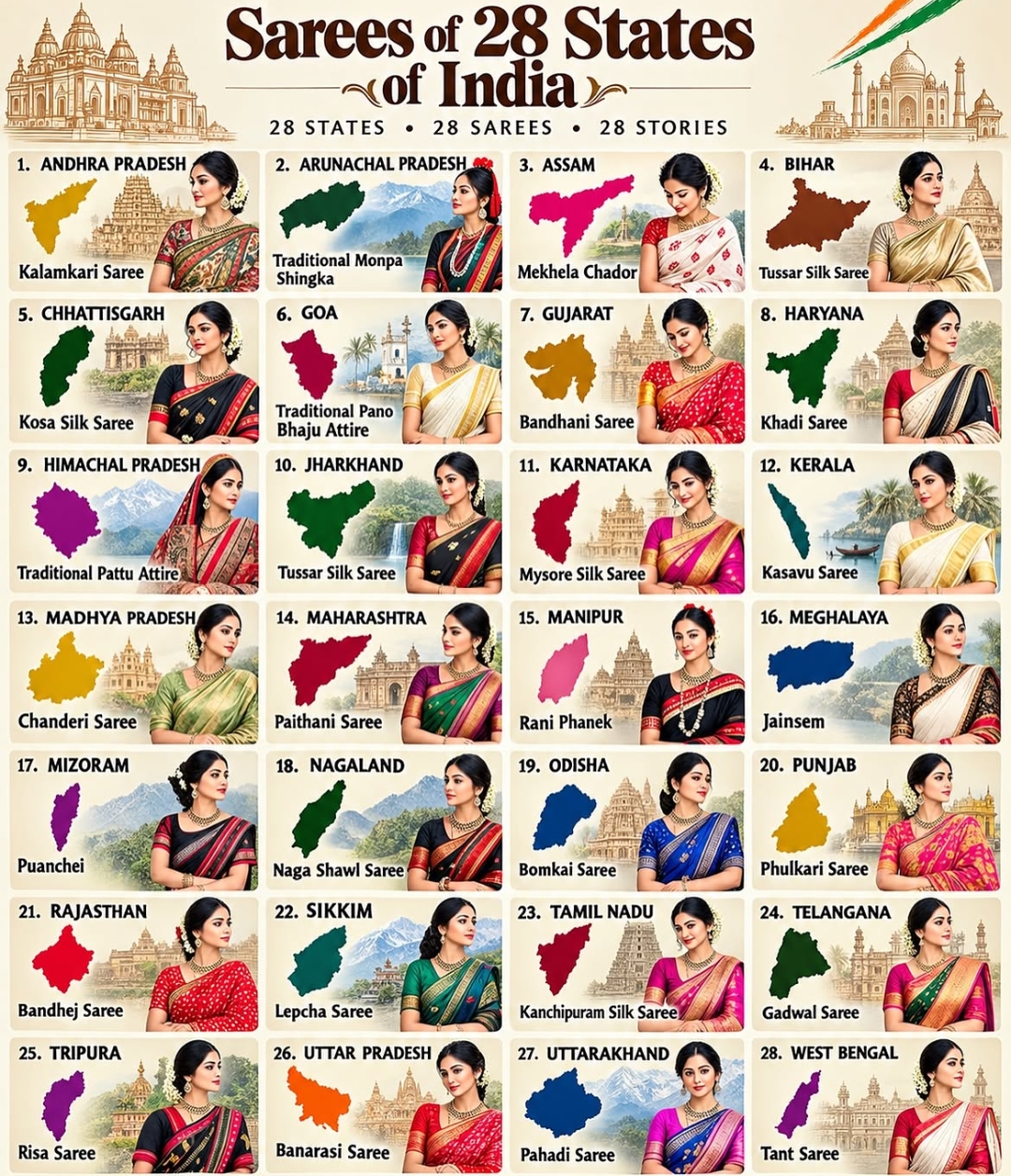
From the rich Kanjeevaram silk of Tamil Nadu to the vibrant Bandhani of Gujarat, every region adds its own colour to the incredible story of Indian fashion.
A saree is never just six yards of fabric.
It can carry the hands of generations, the memories of a grandmother, the celebrations of a wedding, the rhythm of a festival and the identity of an entire community.
Walk through India, and the fabric changes with the landscape.
There is no single definition of “Indian fashion.”
It can be silk.
It can be cotton.
It can be handwoven.
It can be embroidered.
It can be minimal.
It can be extravagantly colourful.
It can be a saree—or a completely different traditional garment unique to its community.
Every motif has a meaning.
Every weave has a history.
Every colour tells a story.
Every drape carries an identity.
Behind these beautiful fabrics are generations of artisans who have preserved techniques long before fashion became an industry. Their hands transform threads into something far greater than clothing—they preserve heritage.
And perhaps that's why seeing India's traditional textiles feels like travelling without leaving the room.
One state gives you silk.
Another gives you colour.
Another gives you geometry.
Another gives you embroidery.
Another gives you centuries-old weaving traditions.
Different languages.
Different landscapes.
Different festivals.
Different traditions.
Yet somehow, all of them belong to the same beautiful story.
28 states.
Countless communities.
Hundreds of textile traditions.
Generations of craftsmanship.
One extraordinary India.
So, forget choosing the “best” saree.

The real question is:
If you could wear one traditional drape or textile from another part of India for a day, which one would you choose?
Tamil Nadu’s Kanjeevaram?
Gujarat’s Bandhani?
Maharashtra’s Paithani?
Kerala’s Kasavu?
Odisha’s Sambalpuri?
Punjab’s Phulkari?
Or something from the beautiful textile traditions of Northeast India?
Tell me your state—or the one you would love to explore.
India isn't just a country of cultures.
It is a country where culture can be worn.
It has a thousand ways of draping tradition, history, craftsmanship, identity and pride.
From the rich Kanjeevaram silk of Tamil Nadu to the vibrant Bandhani of Gujarat, every region adds its own colour to the incredible story of Indian fashion.
A saree is never just six yards of fabric.
It can carry the hands of generations, the memories of a grandmother, the celebrations of a wedding, the rhythm of a festival and the identity of an entire community.
Walk through India, and the fabric changes with the landscape.
There is no single definition of “Indian fashion.”
It can be silk.
It can be cotton.
It can be handwoven.
It can be embroidered.
It can be minimal.
It can be extravagantly colourful.
It can be a saree—or a completely different traditional garment unique to its community.
Every motif has a meaning.
Every weave has a history.
Every colour tells a story.
Every drape carries an identity.
Behind these beautiful fabrics are generations of artisans who have preserved techniques long before fashion became an industry. Their hands transform threads into something far greater than clothing—they preserve heritage.
And perhaps that's why seeing India's traditional textiles feels like travelling without leaving the room.
One state gives you silk.
Another gives you colour.
Another gives you geometry.
Another gives you embroidery.
Another gives you centuries-old weaving traditions.
Different languages.
Different landscapes.
Different festivals.
Different traditions.
Yet somehow, all of them belong to the same beautiful story.
28 states.
Countless communities.
Hundreds of textile traditions.
Generations of craftsmanship.
One extraordinary India.
So, forget choosing the “best” saree.
The real question is:
If you could wear one traditional drape or textile from another part of India for a day, which one would you choose? 
Tamil Nadu’s Kanjeevaram?
Gujarat’s Bandhani?
Maharashtra’s Paithani?
Kerala’s Kasavu?
Odisha’s Sambalpuri?
Punjab’s Phulkari?
Or something from the beautiful textile traditions of Northeast India?
Tell me your state—or the one you would love to explore.
India isn't just a country of cultures.
It is a country where culture can be worn.