

1 Unconditional love is selfless — It flows from a place of inner completeness, not from needing the other person to fill your voids or make you feel worthy
2 It has zero expectations — Your affection isn't tied to pe nirformance, achievements, behavior changes, or "fixing" them; the love remains even when they disappoint or struggle.
3 It accepts the whole person — You embrace their flaws, choices, and growth process without trying to mold them into your ideal version.
4 It seeks freedom for both — Instead of control or possession, it encourages independence, personal growth, and authenticity without fear of losing the connection.
5 It is non-judgmental — Mistakes, differences, or "unlikable" moments don't withdraw warmth; compassion stays steady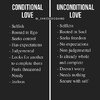
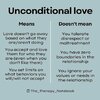
6 It comes from wholeness — You don't look to the relationship to "complete" you because you already feel secure and full within yourself.
7 It sets healthy boundaries — Love doesn't disappear because of bad behavior, but you lovingly enforce limits on what you'll accept (e.g., no tolerating abuse, disrespect, or repeated harm).
8 It never means ignoring your needs or values — Unconditional love isn't self-sacrifice without end; it protects your well-being so the relationship can stay healthy and mutual.
9 It doesn't equal unconditional tolerance — You can deeply love someone and still walk away, say no, or hold them accountable—boundaries are an act of love for both people.
10 It inspires mutual growth — When love feels safe and steady (not threatened or needy), both partners naturally evolve into better versions of themselves without force or manipulation
2 It has zero expectations — Your affection isn't tied to pe nirformance, achievements, behavior changes, or "fixing" them; the love remains even when they disappoint or struggle.
3 It accepts the whole person — You embrace their flaws, choices, and growth process without trying to mold them into your ideal version.
4 It seeks freedom for both — Instead of control or possession, it encourages independence, personal growth, and authenticity without fear of losing the connection.
5 It is non-judgmental — Mistakes, differences, or "unlikable" moments don't withdraw warmth; compassion stays steady
6 It comes from wholeness — You don't look to the relationship to "complete" you because you already feel secure and full within yourself.
7 It sets healthy boundaries — Love doesn't disappear because of bad behavior, but you lovingly enforce limits on what you'll accept (e.g., no tolerating abuse, disrespect, or repeated harm).
8 It never means ignoring your needs or values — Unconditional love isn't self-sacrifice without end; it protects your well-being so the relationship can stay healthy and mutual.
9 It doesn't equal unconditional tolerance — You can deeply love someone and still walk away, say no, or hold them accountable—boundaries are an act of love for both people.
10 It inspires mutual growth — When love feels safe and steady (not threatened or needy), both partners naturally evolve into better versions of themselves without force or manipulation